

Start here
Why It Pays to Know Your Engine Bay
Next
The Major Components at a Glance
Then
What You Can Safely Check Yourself
When you're ready
What to Leave to a Mechanic
Why It Pays to Know Your Engine Bay
Most drivers go years without ever really looking under the hood — and that's a missed opportunity. You don't need to be a mechanic to benefit from basic engine bay familiarity. Knowing where the oil dipstick is, recognizing what a low coolant warning actually means, or spotting an unusual leak can save you from a breakdown or an unnecessarily large repair bill.
It also puts you in a stronger position when you talk to a mechanic. Being able to say "I noticed a pinkish fluid pooling near the front of the car" is far more useful than "something looks wet." As part of the broader picture of car ownership costs and responsibilities, basic mechanical literacy is one of the most practical skills an everyday driver can build.
Engine bay
The compartment under the hood that houses the engine and related systems. Also called the engine compartment.
Coolant (antifreeze)
A liquid that circulates through the engine to absorb heat and prevent overheating. It also prevents freezing in cold temperatures.
Dipstick
A long metal rod you pull out to check the engine oil level. It has MIN and MAX marks to show whether oil needs to be added.
Firewall
The metal barrier that separates the engine bay from the passenger cabin, protecting occupants from heat and fire.
Fuse box
A panel containing small electrical fuses that protect your car's circuits. Blown fuses are often the cause of non-working lights or accessories.
Reservoir
A small container that holds a specific fluid — such as coolant, brake fluid, or washer fluid — at a level you can check without opening the main system.
The Major Components at a Glance
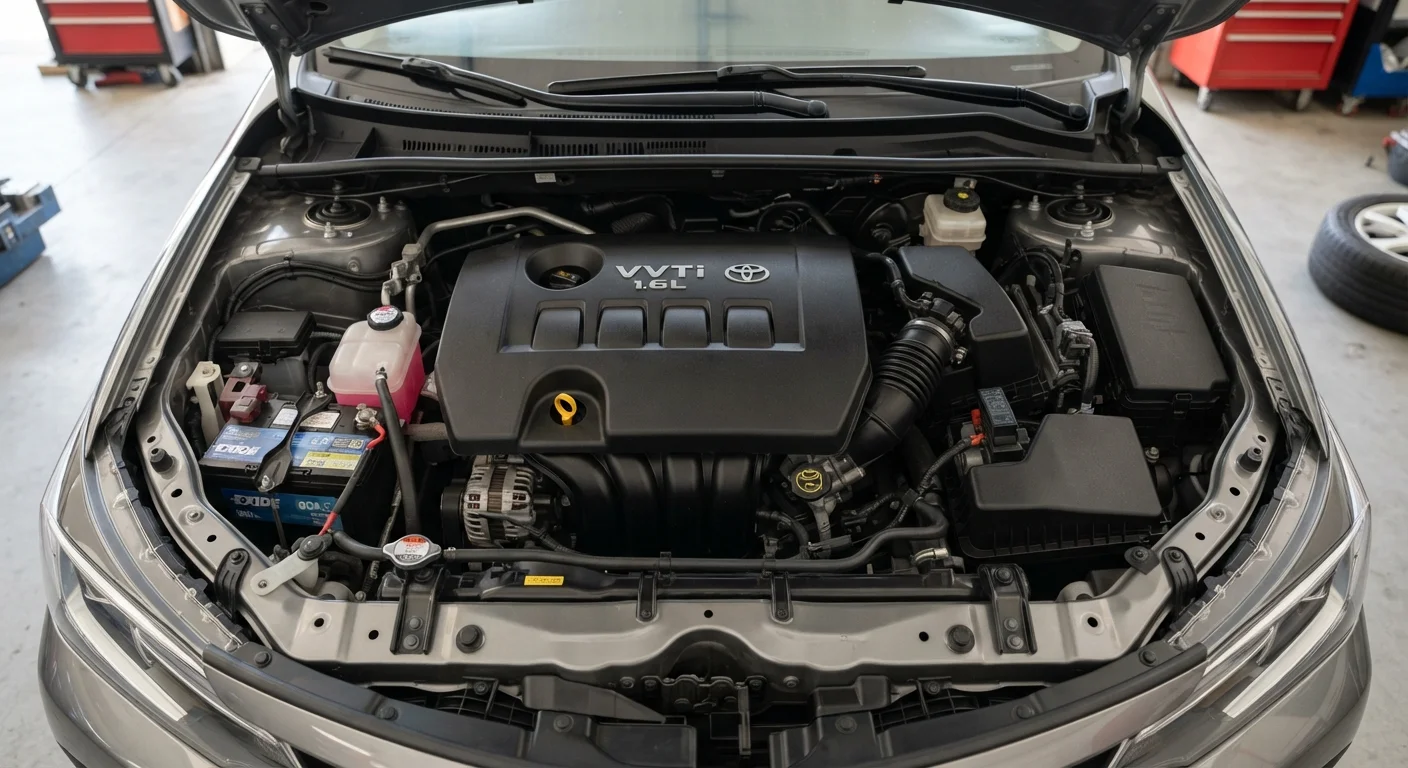
Engine bays differ by make and model, but most gasoline-powered vehicles share the same core components. Here's what you're likely to find:
- Engine block: The large central mass of metal. This is where fuel combustion happens. You won't directly service this yourself.
- Oil cap and dipstick: Usually labeled with an oil can icon. The dipstick lets you check oil level and color.
- Coolant reservoir: A translucent plastic tank, often marked with MIN and MAX lines. Coolant (also called antifreeze) keeps the engine from overheating.
- Battery: A rectangular box, usually near the front corner of the engine bay. Two cables — positive (red) and negative (black) — connect it to the car's electrical system.
- Air filter housing: A plastic box connected to a large duct leading to the engine. It holds the engine air filter, which plays a quiet but important role in engine performance.
- Brake fluid reservoir: A small, typically translucent container near the firewall (the wall separating the engine from the cabin) on the driver's side.
- Fuse box: Often located near the battery. Contains fuses that protect the car's electrical circuits.
- Windshield washer fluid reservoir: Usually marked with a windshield/spray icon. One of the simplest things to refill yourself.
Layouts vary — in some front-wheel-drive cars the engine is mounted sideways, which can make components feel scrambled compared to what you'd expect. Your owner's manual will have a labeled diagram specific to your vehicle.
What You Can Safely Check Yourself
Several routine checks require no tools and carry minimal risk when the engine is cold. Make these part of a monthly habit:
- Engine oil: Pull the dipstick, wipe it clean, reinsert it fully, then pull it again. The oil level should fall between the MIN and MAX marks. Healthy oil is amber-colored; dark or gritty oil signals it's due for a change.
- Coolant level: Check the external reservoir — never open the radiator cap on a hot engine, as pressurized steam can cause serious burns. The level should sit between the marked lines.
- Windshield washer fluid: Open and fill as needed. This is the most straightforward of all fluid checks.
- Battery terminals: Look for white or blue corrosion buildup around the cable connections. Light corrosion is common; heavy buildup can affect starting reliability.
- Air filter: If you can access the housing, hold the filter up to light. Heavy gray or black clogging means it likely needs replacing.
For a more detailed walkthrough of each fluid, see our guide to fluid checks you can do in your driveway.
Check Fluids When the Engine Is Cold
The most accurate fluid readings — especially for oil and coolant — come when the engine has been off for at least 30 minutes. Heat causes fluids to expand and can make levels look higher than they are. Make under-hood checks part of your morning routine before a drive, not immediately after parking.
What to Leave to a Mechanic
Knowing your limits is just as important as knowing your way around the engine bay. Some tasks look approachable but carry real safety risks if done incorrectly.
Always defer to a qualified mechanic for:
- Brake system work — hydraulic brake lines, calipers, and pads involve your car's most critical safety system.
- Fuel system components — fuel injectors, fuel lines, and the fuel pump involve flammable materials under pressure.
- Hybrid or electric vehicle high-voltage systems — these carry lethal voltage levels and require specialized training and equipment.
- Timing belt or chain replacement — incorrect installation can destroy an engine.
- Anything requiring the engine to be lifted or partially removed.
If you're unsure whether a task is within DIY reach, our guide on DIY car maintenance vs. taking it to a shop can help you decide. And don't underestimate the value of staying on top of routine maintenance — small, consistent habits are far cheaper than emergency repairs. If a dashboard warning light comes on after you've been under the hood, don't ignore it.
Never Open the Radiator Cap on a Hot Engine
The cooling system operates under pressure, and opening the radiator cap when the engine is hot can release a burst of scalding steam and fluid. Always wait until the engine is completely cool — or check coolant level through the external overflow reservoir, which is safe to inspect at any time.
Frequently Asked Questions
Yes — opening the hood is safe as long as the engine has cooled down first. Never open the radiator cap or touch hot components right after driving. Always engage the hood prop rod or ensure the hydraulic support is holding the hood up before reaching in.
Most vehicles have a hood release lever located inside the car, typically beneath the dashboard on the driver's side. After pulling that lever, you'll usually need to press or lift a secondary latch just under the hood's front edge to fully open it.
Engine oil, coolant (via the overflow reservoir), windshield washer fluid, and power steering fluid are all visible through clearly labeled reservoirs. Brake fluid can also be viewed through its translucent reservoir. Check these when the engine is cold for accurate readings.
A quick visual check once a month and before any long road trip is a practical habit. Fluid levels and obvious leaks or loose components are the main things to look for during routine checks.
The engine air filter prevents dirt and debris from entering the engine. It's typically housed in a plastic box connected to a large air intake tube. Replacing it is one of the more beginner-friendly DIY tasks, but check your owner's manual to confirm the location and correct filter type.
Engine bay layouts vary significantly based on whether the car is front-wheel drive, rear-wheel drive, or has a transversely or longitudinally mounted engine. Your owner's manual will show you the exact layout for your model.
The content on this site is for informational purposes only and is not a substitute for professional advice. Always consult a qualified professional for guidance specific to your situation.